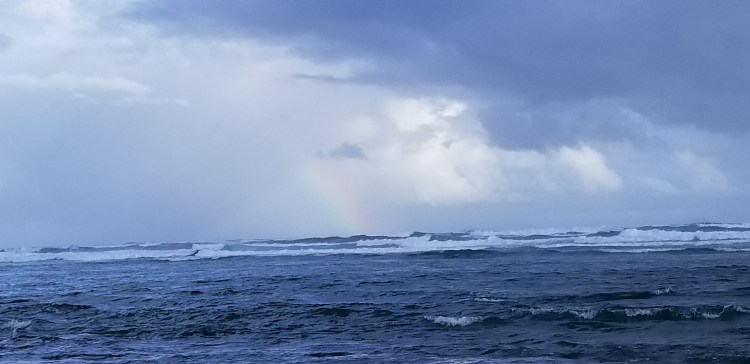
Time to move on from Mokule’ia Camp. We said goodbye to an English couple who we were friendly with who are also in a Hawaii Surf Camper van, but theirs is a VW. They were leaving the next day for “Blighty” as the guy called it, and his wife was glued to her phone trying to find out what is happening with the coronavirus. She was unable to sleep last night for worrying about it. We have had no news about anything, so are not worried!
Our next camp, Malaekahana, is over on the east, windward side of the island but is only about 20 miles away so we are going to take our time getting there.
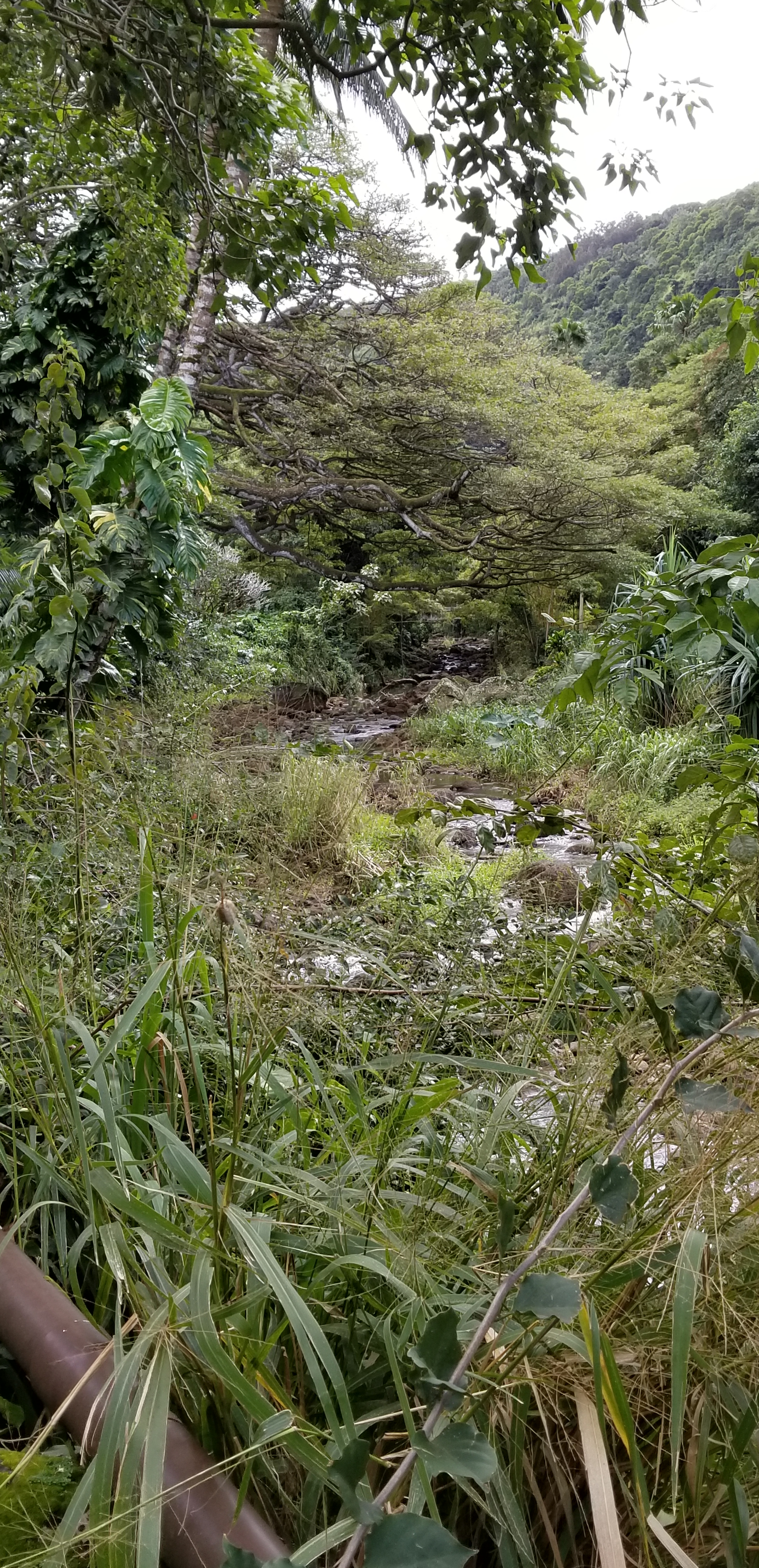
First stop was the Wiamea valley, a narrow notch between cliff-like walls.
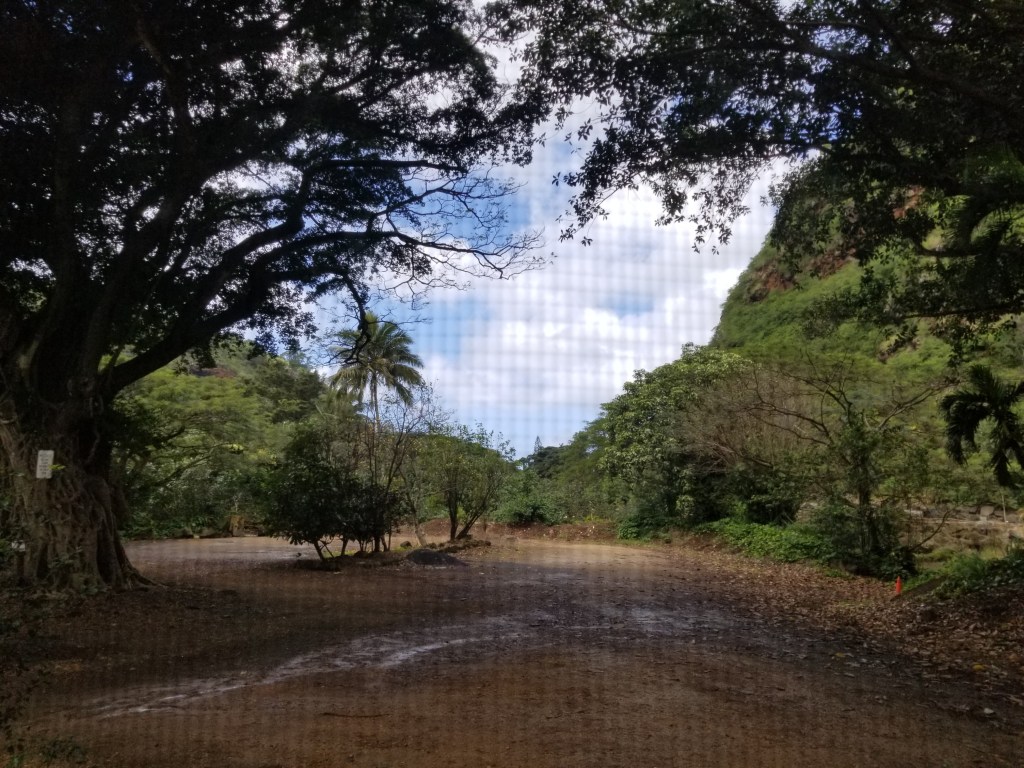
We turned off the busy Kamehameha highway into a shady green entrance road overhung by towering trees. A small “river” was beside us, and across it, a wide manicured green lawn with three resident big white geese.
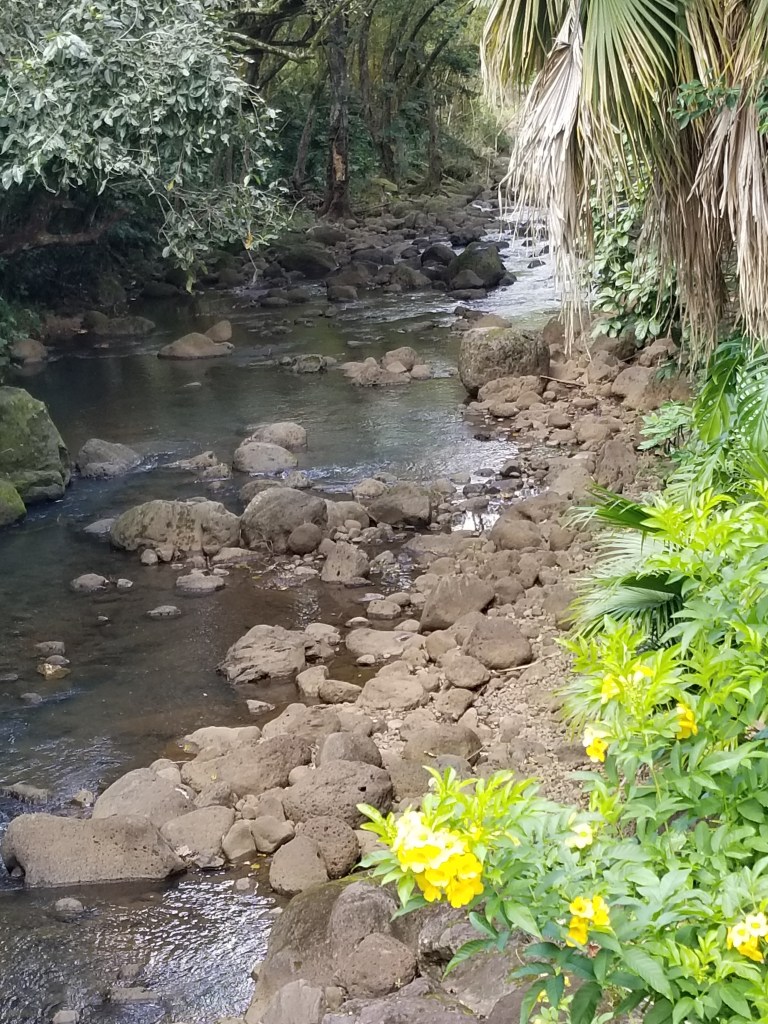
Digression on fresh water here: none of the rivers we have seen are bigger than Pothole Creek on a good day. The map shows these little streams in every valley, but up in the wide central valley between the two mountain ranges they use drip irrigation and black plastic mulch on the pineapples. So, hot, humid . . . and dry? But the water is plentiful and non-regulated in the campgrounds. There aren’t even aerators on the taps. And it’s very tasty!
We proceeded to a large, shady parking lot, where a security guard in a golf cart was keeping watch. Lots of cars, so I guess it is a target-rich environment.
The Wiamea Valley is an important place in Hawaiian history, and the visitor center reflected that. It was well-kept, had good parking, security, and turnarounds for tour buses. Lots of people visit here.
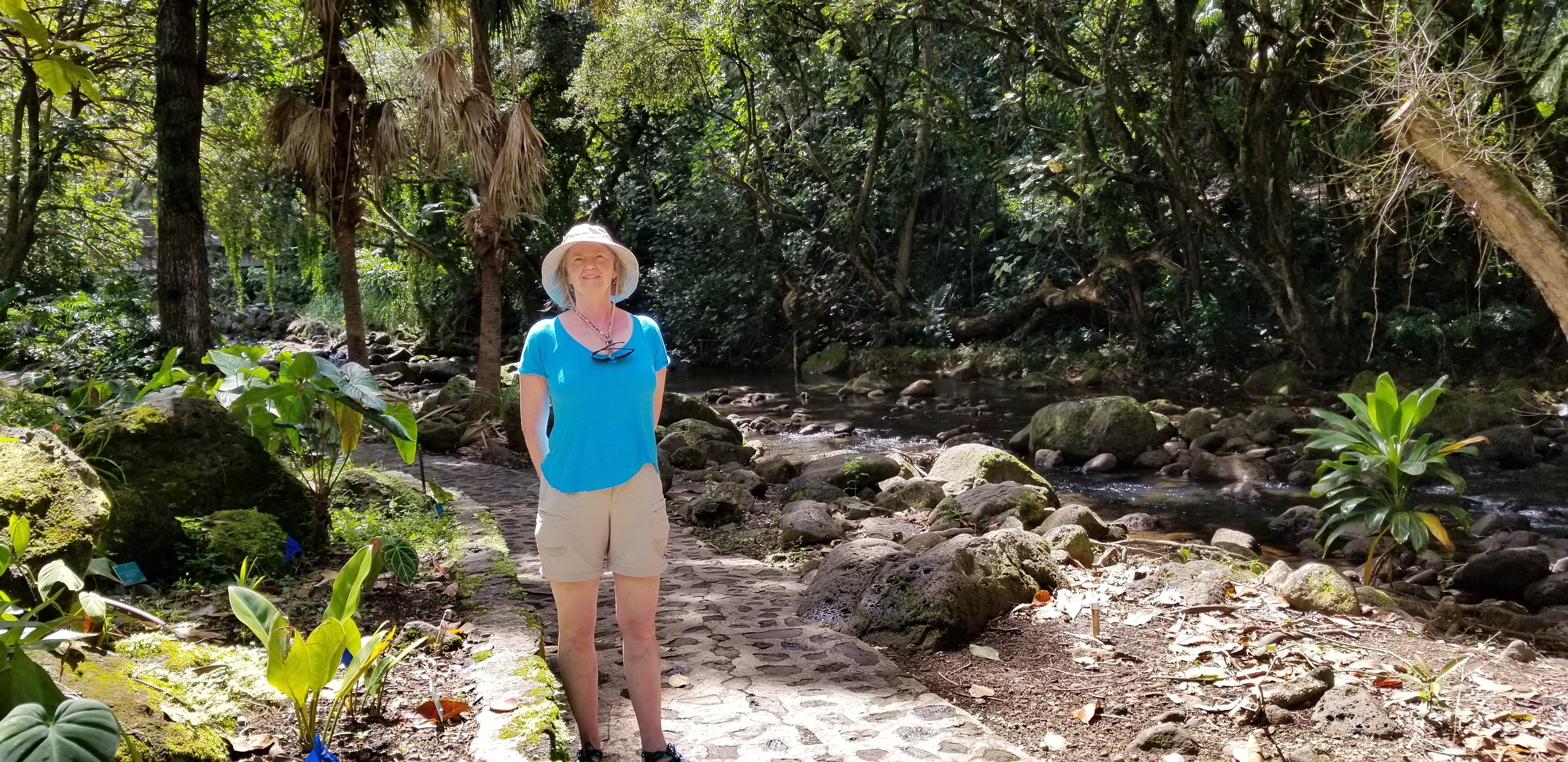
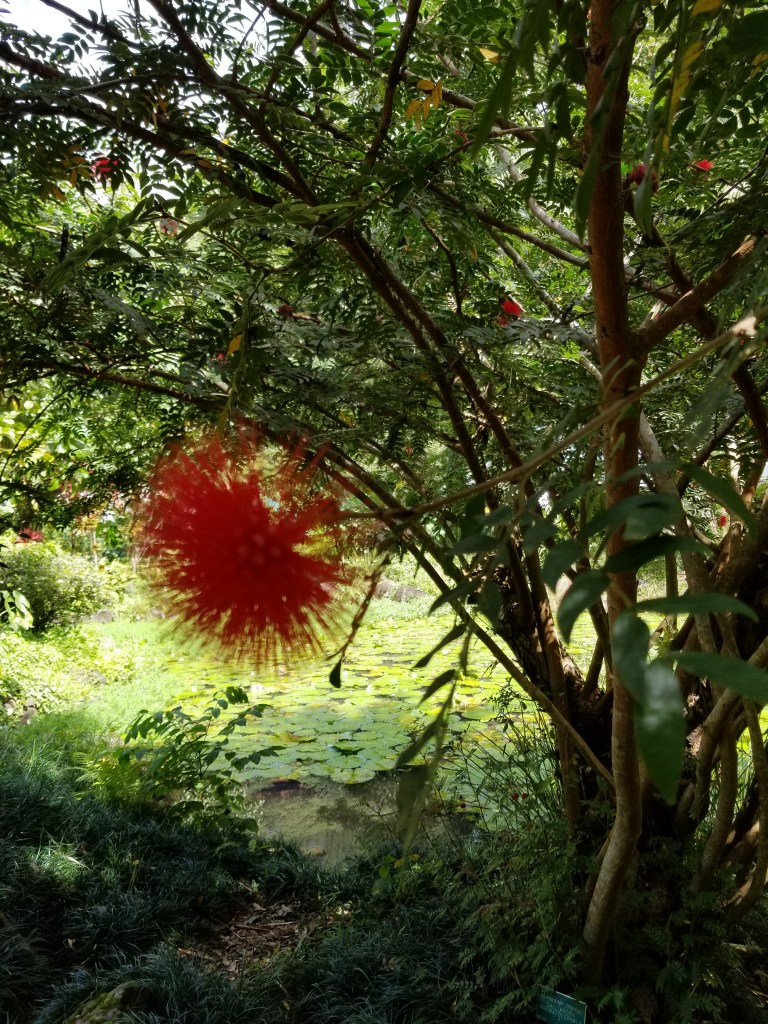
It is also a botanic garden, started by and cared for by a Harvard botanist for many years. There are lots of plants from other Polynesian locations growing here. Hybridizing the hibiscus was a thing Victorian Hawaiians did, and there were many varieties here.
Pre-contact, this watershed (which is how the ancestral Hawaiians divided up the land) was the home of a bunch of related families who lived as a tribe. Historians think that a high shaman almost always lived here, so maybe it was sort of like Vatican City?
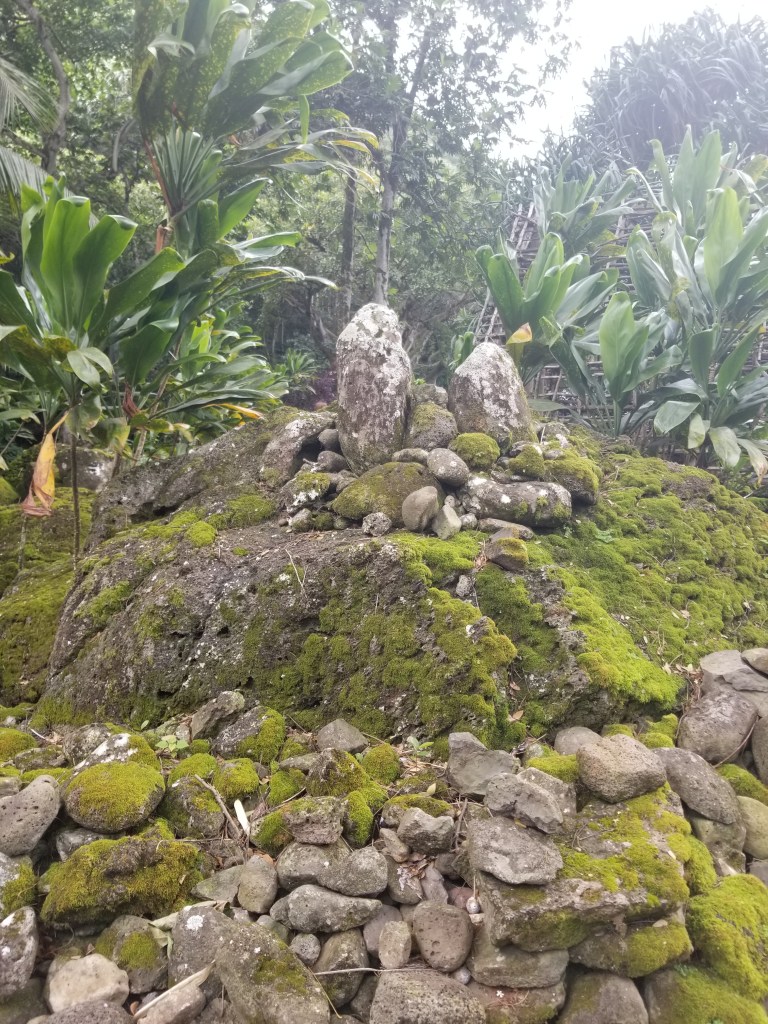
Anyway, there are a bunch of large lava rock remains of their buildings, animal pens, storage facilities, etc, still in place here. The branch/vine/thatch buildings have been reconstructed over the important ones, and there are crafts people demonstrating how to make cloth out of bark and the like.
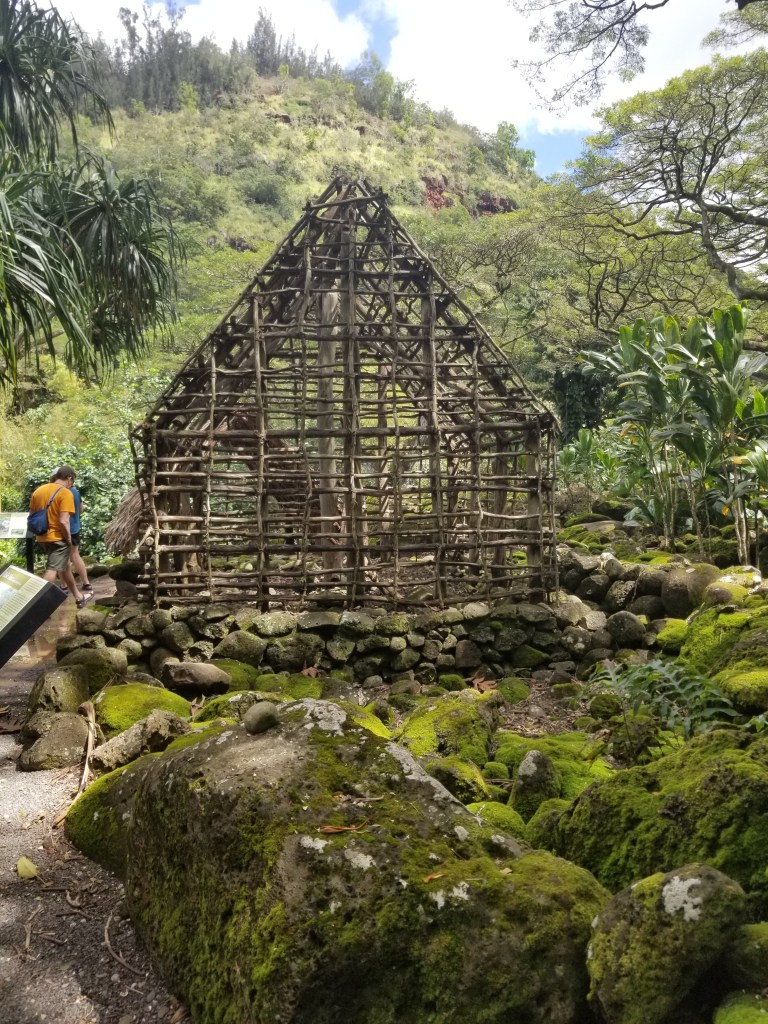
There were lots of informative signs about what was “kaput” ie sacred and thus taboo. Women and men were forbidden to eat together, women would be killed if they ate bananas. The watershed was used from top to bottom: planted crops up high on a plateau out of the notch, living quarters halfway down, and fishermen and fish pens at the shore.
Quite a long way up the valley is a waterfall. We again were given many, many reminders that this was all sacred ground and we should be respectful at all times and behave accordingly. Thus it was a bit of a shock to arrive at the waterfall and discover a concession stand selling Coke and potato chips, a booth selling swimsuits and flip flops, and a thatch tiki hut of “lifeguards” who would rent you a life jacket and then you could swim in the pool at the base of the waterfall.
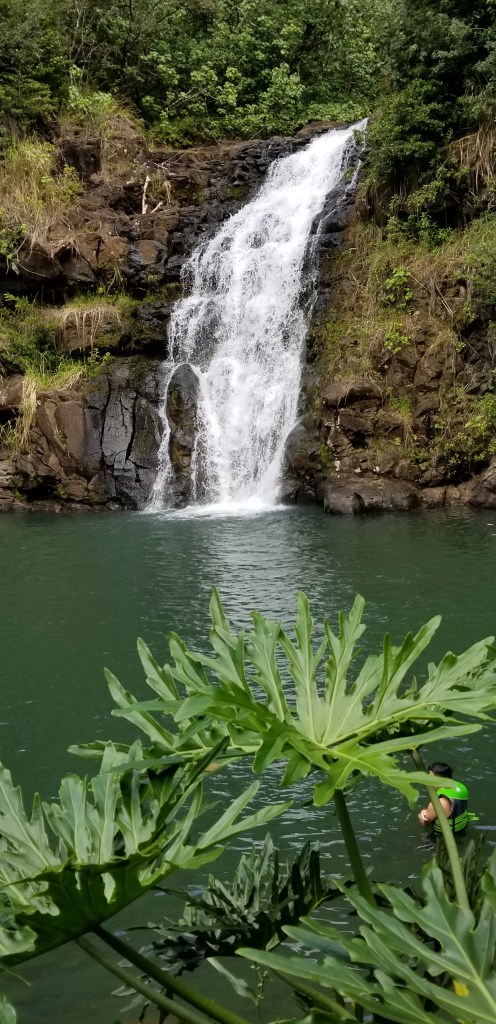
There were about 15 tourists bobbing around in the pool, but the real action was on the rocks around. One young woman hurried up to the pool with her friend, stripped down to a thong bikini, and then spent about five minutes doing Kim Kardashian butt shots in front of the sacred waterfall. You know that was going on Instagram as soon as she got back to cell phone coverage. I can’t imagine what any native Hawaiians who are sad about their history must think.
It was a long walk up and back the Wiamea Valley but we really enjoyed it. I drank a Coke, the first one in years, Mike had Gatorade, so I guess we needed the electrolytes. We left without buying anything, but did read all about Eddie Aikua.
Our tour guide Tall Tom told us there is a saying in Hawaii that you will see on bumper stickers, t-shirts, and hats: “Eddie Would Go.” It’s kind of a challenge to put the well-being of others first, even at great risk to yourself.

It arose from his career as a life guard at Wiamea Bay, where he charged into sometimes very dangerous water on his board and saved 500 people from drowning. And also from his tragic death, which you can read about here: https://en.wikipedia.org/wiki/Eddie_Aikau
We continued onto Malaekahana Beach Campground. The lady at the check in desk gave us a map of how to find our spot, looked at the van, and said we’d have to go a special way because we were too tall to fit through “the tunnel of trees.” And that if we had any problems at night, to call the security guard. Ok . . .
We got lost. So lost. Backtracked numerous times, turned around on “roads” that were little more than tracks through the trees, but finally we found #5 in the vehicle camping. There was no one else there, but there were lots of feral cats and “jungle fowl,” aka chickens.
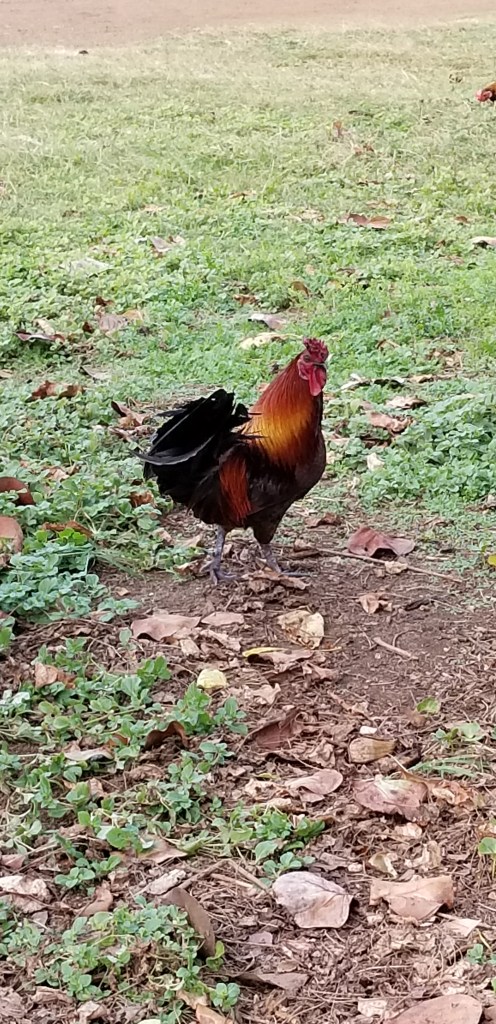
We walked down to look at the water and saw a few surfers way down the beach where the tent camping was. And two guys skulking about the other way, over toward where there was a fence with a big no trespassing sign. On the other side was the conservation area.
These guys were carrying what looked like grocery bags stuffed with something, like they were homeless. They were very furtive, and tried to move out of our sight, but couldn’t without going over the fence. Peering, peering into the water, casting many glances at us. One of them pulled something out of his bag, something long and kind of shiny. A fishing net? We decided they were turtle poachers!
We saw them later, on the wrong side of the fence, disappearing over the headland. Don’t know if they got turtles or not.
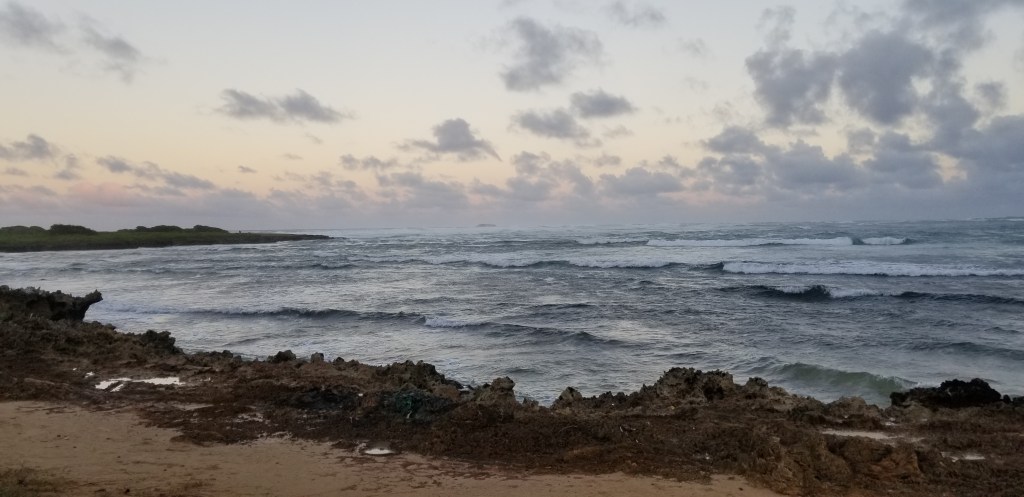
By then it was getting dark, and we were happy to see other vans arriving. Duh, it’s car camping; they have to take everything when they go out for the day.
So despite our misgivings, we set up camp and had a peaceful night.
 far.code.blog